Safety centre · source-led
Marine Lithium Battery Safety
LiFePO4 is only one part of the risk picture. A safe boat combines a reputable pack, functioning BMS, compatible chargers, fault-current protection, restraint, ventilation, monitoring, documentation and an emergency plan the crew understands.
- Emergency ashore
- Raise the alarm, call 000 and move people to safety.
- Never normal
- Heat, swelling, damage, leakage or venting gas.
- Verify
- Manufacturer instructions and rules applying to the vessel.
The first rule
Battery protection and BMS shutdown
An AMSA investigation into a commercial-vessel explosion found that a replacement charger may have bypassed the battery-management system. AMSA also noted inadequate ventilation. The lesson is broader than that incident: a BMS is part of the safety architecture, not an inconvenience to work around.
The correct design depends on the battery instructions, vessel category and jurisdiction. Use this page to frame the conversation, then have the actual boat assessed by a suitably qualified professional.
Five layers
Layers of lithium battery installation protection
- 01
Choose
A reputable supplier, current manual, visible operating limits and an Australian warranty path.
- 02
Protect
A functioning BMS, source protection, covered conductors and accessible isolation designed as one system.
- 03
Install
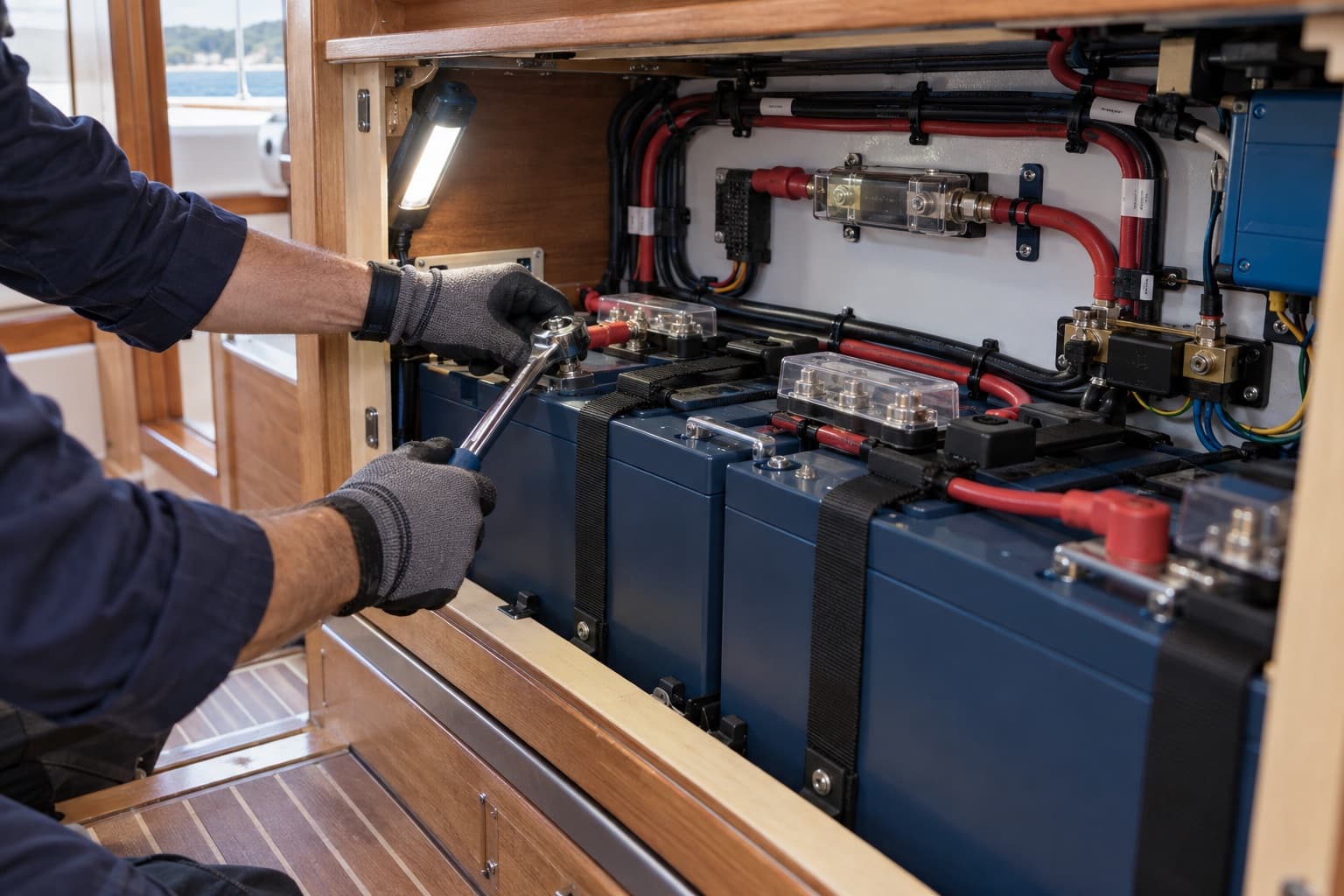
Mechanical restraint, suitable ventilation, cable support and separation from heat, fuel and loose stores.
- 04
Commission
Every charge source tested, settings recorded, monitoring calibrated and documentation handed over.
- 05
Respond
A written emergency plan, warning signs understood and no need to open the battery space during an incident.
Stop-use signs
Battery fault warning signs
- Unusual heatA pack or connection becomes hotter than its normal operating pattern.
- Swelling or deformationThe case changes shape, fasteners move or restraint no longer sits correctly.
- Damage or contaminationImpact, water ingress, corrosion, leakage or compromised terminal insulation.
- Odour, sound or ventingHissing, popping, unusual odour, smoke or gas from the battery space.
- Repeated BMS eventsUnexpected disconnects, cell-voltage alarms or temperature warnings need diagnosis.
Primary reading
Australian safety authorities and manufacturer instructions
AMSA’s electrical-safety guidance calls for competent installation, regular inspection, manufacturer instructions, suitable BMS protection and consideration of heat, gas and smoke monitoring. The CSIRO report published by ACCC Product Safety explains why cells, the BMS, wiring, connections, charging and thermal management all contribute to safe operation.
Direct answers
Marine lithium battery safety questions
Is LiFePO4 safe on a boat?
It can be used safely when the cells, BMS, charging, fault-current protection, restraint, ventilation and operating procedures are designed as a system. The chemistry does not make poor installation safe.
What are warning signs of a lithium battery problem?
Stop using a pack that is unusually hot, swollen, leaking, damaged, making unusual sounds or venting gas. Isolate it only if that can be done remotely and safely, keep people away and follow the vessel emergency plan.
What should I do if a lithium battery catches fire?
Raise the alarm and prioritise people. If berthed or ashore, call Triple Zero and evacuate to a safe place. At sea, make the appropriate distress call and follow the vessel emergency plan; do not open a battery space or attempt unfamiliar firefighting actions.
Important: This overview can be incomplete or wrong for your vessel. It is not emergency-response training, electrical advice or certification. Read the full disclaimer and follow current manufacturer, emergency-service and maritime-authority instructions.