32 checks · six stages
Marine Lithium Battery Conversion Checklist
Use this before requesting a quote, during installation and at handover. It does not certify the boat and it cannot decide which rules apply to your vessel; it gives you a structured list to work through with a suitably qualified marine electrician.
- Start with
- Loads and charging—not a battery catalogue.
- Finish with
- A tested system and a complete evidence pack.
What a complete quote covers
Battery conversion scope and installation planning
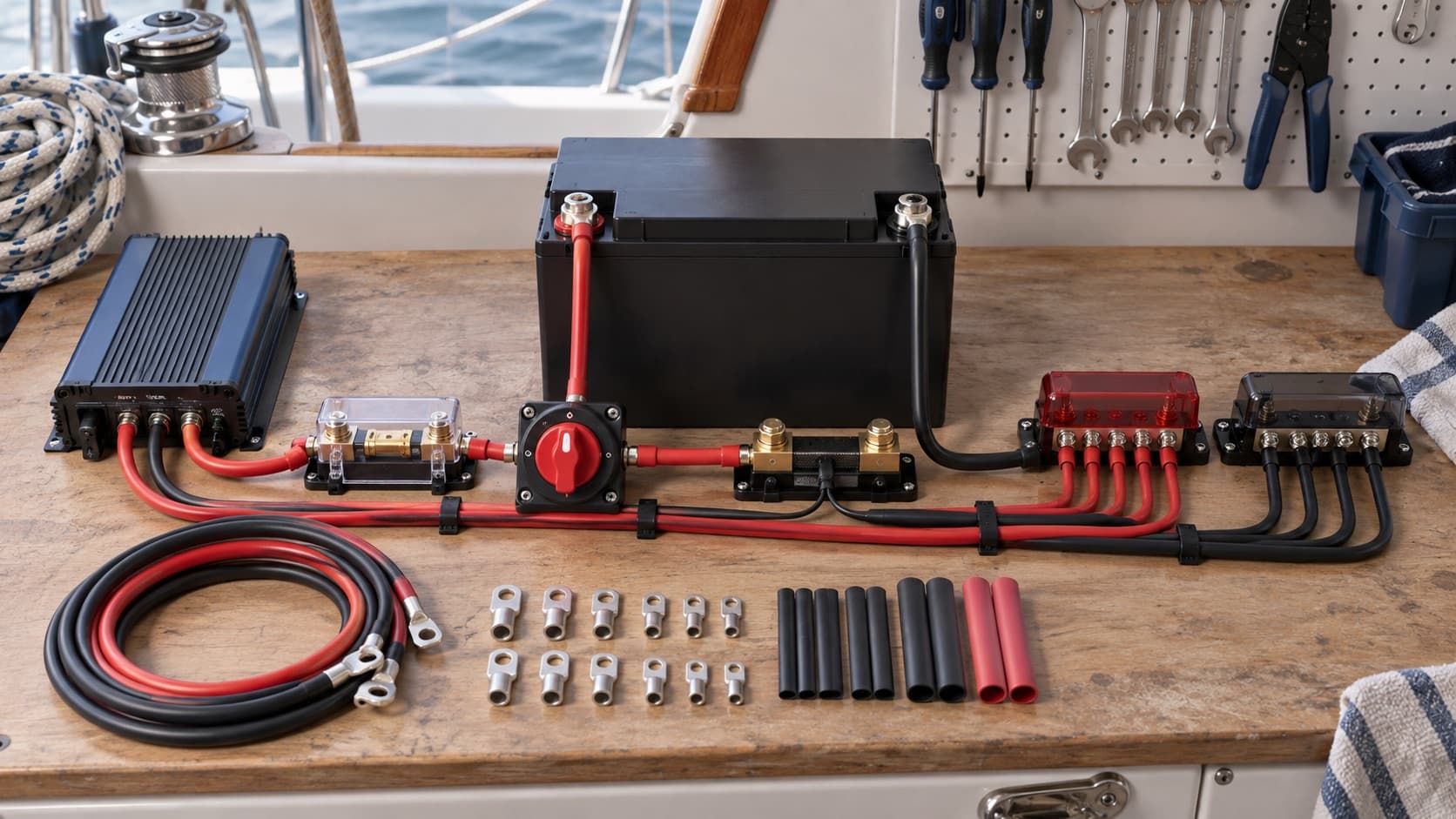
A useful quotation connects capacity, charging, fault-current protection, cable, restraint, monitoring and documentation. If one of those categories is absent, ask whether it is deliberately retained from the existing system or simply missing.
Your planning progress
0 of 32 checks
Define the job
Size from the boat and its real loads before selecting a battery case.
Check the battery evidence
A warranty headline is not a system specification.
Specify charging
Lithium is a charging-system project, not a drop-in battery swap.
Protect and install
Fault-current protection, restraint and service access are designed together.
Commission and document
A safe installation should be understandable to the next electrician and the insurer.
Maintain the system
Recheck the things vibration, heat, corrosion and software can change.